

Disclaimer: This post is for entertainment only and is not financial advice. See full legal disclaimers here.
Modern Pokémon Sets Begin To Soften
When PSA paused grading due to overwhelming demand for graded TCG cards, I wrote the following in this post
“The pause does not prove that the Pokémon market is about to crash, but it is a clear sign that grading demand and speculative activity are running hot. Until the backlog improves, I’m prioritizing liquidity and margin of safety”
We are now starting to see evidence that the market for modern Pokémon is indeed cooling. According to ChasingFoil’s Market Indexes, here is the performance of various sets over the last 30 and 90 days.
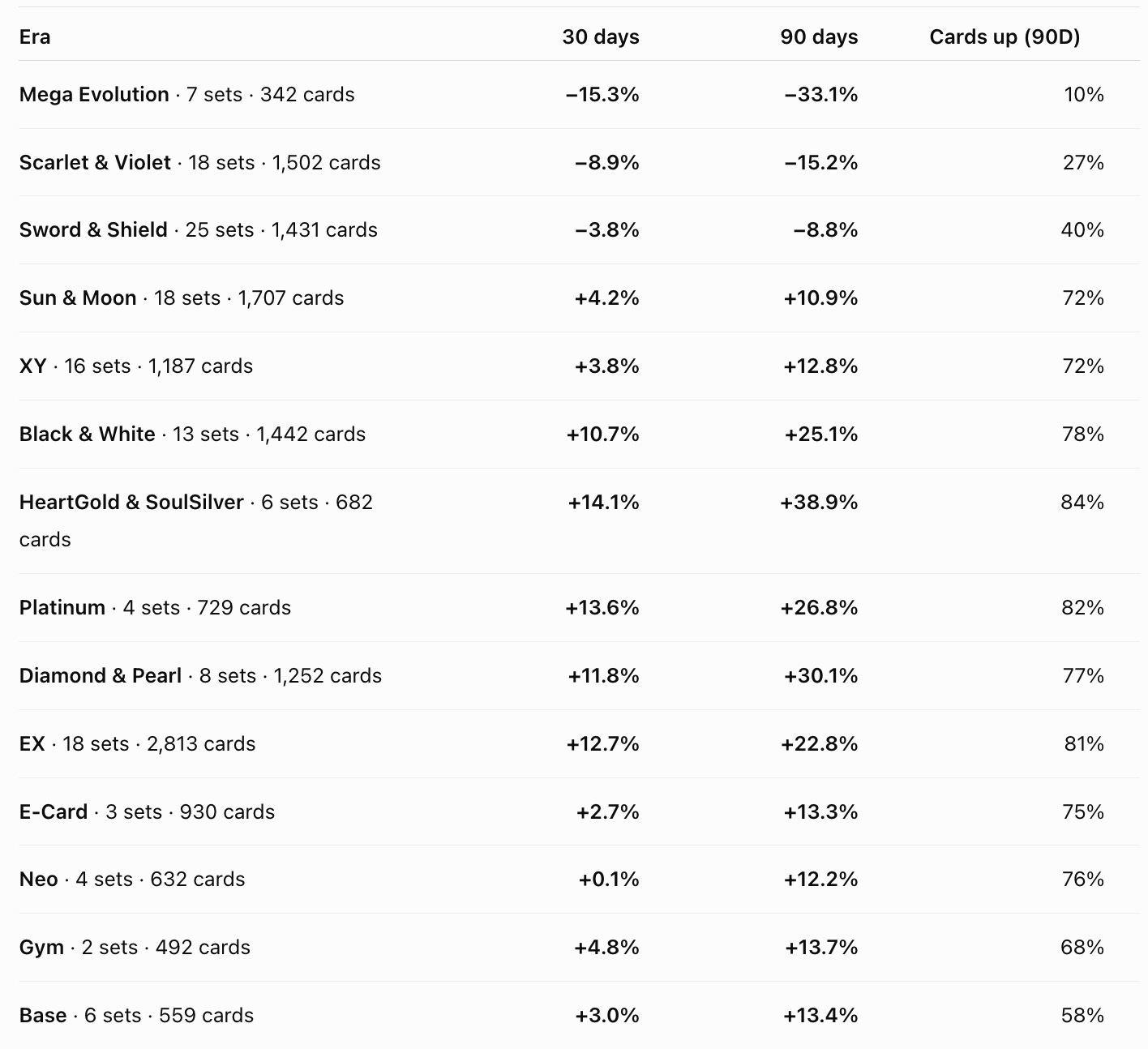
The table above shows a clear divide. Modern sets (Mega Evolution, Scarlet & Violet, and Sword & Shield) were all down while mid-era cards and vintage sets were up on the month. Those mid-era sets had especially strong gains over the last 90 days.
I think there are several forces working together to help explain why newer sets are down while older ones are still increasing. Modern cards, especially Scarlet & Violet and Mega Evolution, are suffering from multiple reprints and additional product releases, which continue to increase the supply.
Older cards are facing the opposite market conditions. Collectors attention has moved from the more modern stuff to underappreciated mid-era cards, which are much harder to find in near mint or mint condition. Since supply is thin on those mid-era/vintage cards, it doesn’t take much additional demand to drive strong price increases. However, just because a vintage PSA 10 sold for some ridiculous amount, it doesn’t mean those transactions actually completed or that some astronomical price would hold up if more inventory entered the market.
Additionally, corporate buying for their digital packs may also be contributing to the price increases. PSA has confirmed that GameStop, Coinbase, and Courtyard (among others) are buying inventory through its Partner Offers program. There are also anecdotal rumors of these companies giving buyers nearly unlimited budgets to buy graded vintage cards at shows. With that type of buying power, demand could have an outsized effect on older cards because of the limited supply.
My Read: Modern cards are losing their early speculative premiums as supply and PSA backlogs catch up with demand. Older and mid era graded cards are benefiting from renewed collector interest in vintage sets as well as commercial inventory demand. That explains the divergence in returns we’re seeing better than the Pokémon market is either strong or weak.
Millions Stolen From A PSA Shipment
Last month there was a heist where several pallets of graded PSA cards were stolen from a FedEx truck parked outside of PSA’s facility in Santa Ana, CA. Here is a link to the official statement from PSA on the incident: Stolen PSA Orders: What We’re Doing and How You Can Help

PSA states there was approximately $1 million in stolen merchandise across 6,451 items. It includes both TCG and sports trading cards. The FedEx truck was parked outside the PSA facility and apparently the driver left the vehicle unattended for up to 90 minutes.
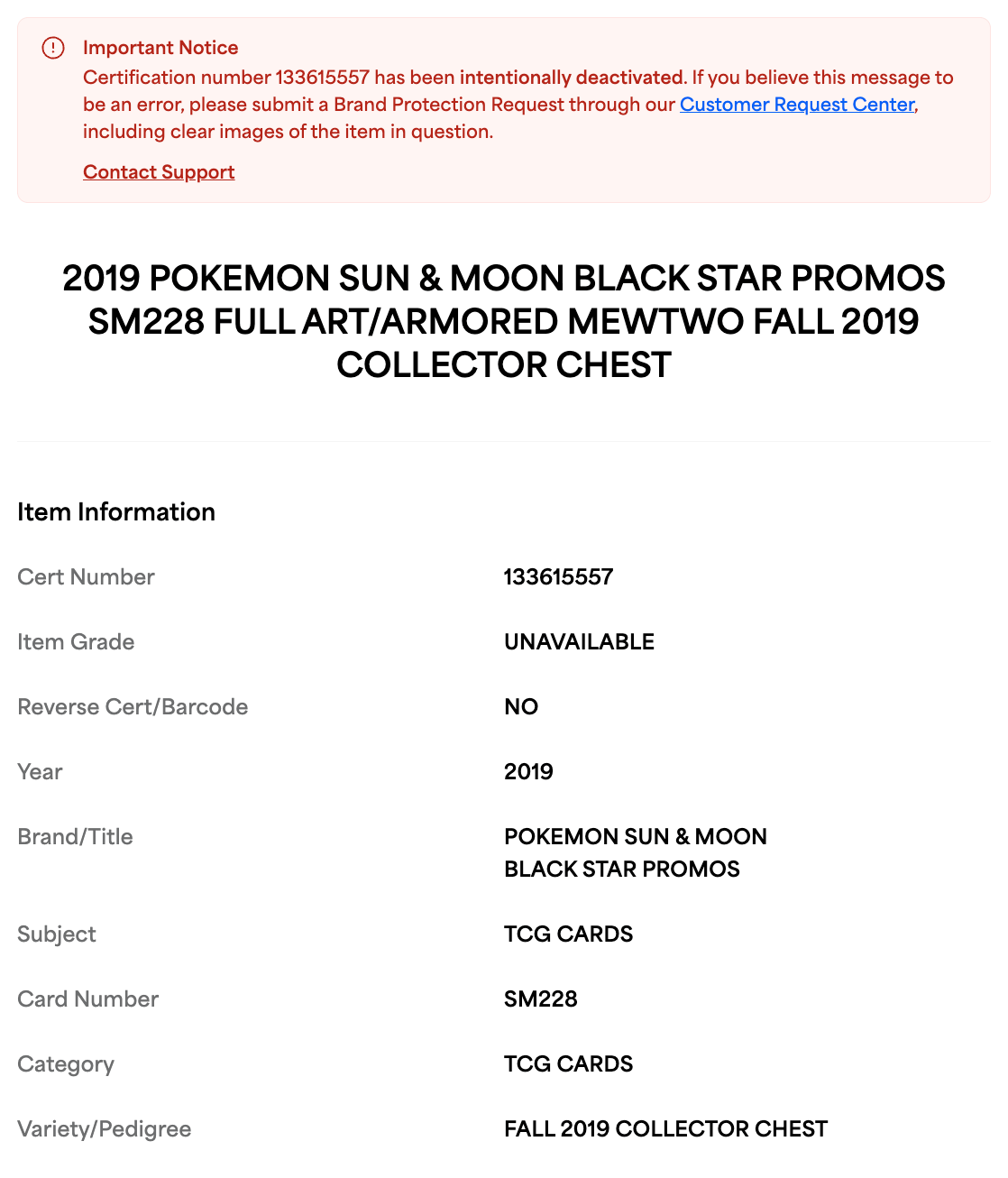
PSA has published a complete list of the stolen items, including certification numbers. They also deactivated those certifications to help prevent resale. I checked one of the numbers on the list, and here is how PSA indicates a card is part of this situation.
PSA has begun taking steps to refund grading fees and compensate the affected customers based on the card’s valuation and under the companie’s insurance coverage policies. Anyone who has ever dealt with insurance knows that this is going to be a long process, and there will be differences of opinion on a card’s value. I sympathize with businesses who might have had high value items taken and now they have to wait for that process to play out. This is generally why I get very conservative when the market gets as overheated as it has been the last 12 months. Crazy stuff happens and you can’t predict when or how.
Here are some steps you can take to protect yourself:
Verify a card’s PSA certification number before buying.
Check the PSA Verification Tool. Enter the card’s cert directly into the PSA lookup database. PSA has deactivated the certification numbers associated with the stolen cards and will show the message above if it’s invalid. Also avoid buying a card if the certification number is hidden.
Hold off on grading cards until PSA has a chance to reassess security measures.
PSA is in the process of re-examining security practices and delivery partners. Just to be safe, it might make sense to wait until they have made the necessary adjustments to their internal processes. I’ve never had an issue like this with PSA in the past, and I’m sure they will get the issue resolved.
Break large grading submissions into smaller batches to limit your exposure.
For collectors and businesses that depend on grading, suspending submissions isn’t always practical. One precaution I’ve used in the past is dividing large submissions into smaller batches rather than sending them all at once. Instead of sending one large 500 card submission, I might instead divide them into five submissions of 100 cards each.
There are several reasons I prefer this approach. Grading is subjective. If I happen to get a particularly strict grader on a submission, I’ve limited the impact to only a portion of the submission. More importantly, splitting up the submission reduces the number of cards exposed to a single shipping or handling incident. Packages can get lost, stolen, or damaged. There have also been anecdotal reports on social media of collectors receiving opened packages or shipments with missing contents. While it’s difficult to verify the extent of such incidents, they reinforce the importance of taking precautions with your valuables.
As card values continue to rise, I think these are some sensible ways to manage your risk. The goal isn’t to eliminate every possible problem, that’s impossible. It’s to make sure a single unfortunate event doesn’t put a substantial portion of your collection or business at risk.
Recent Reprints Are Adding Pressure to Scarlet & Violet & Mega Evolution Cards
I think the bull run over the last three years is partly responsible for the weakness we’re now seeing in Scarlet & Violet and Mega Evolution cards. However, additional supply is also putting pressure on prices. TCGplayer has reported recent reprints of Prismatic Evolutions, Destined Rivals, and Ascended Heroes. Shrouded Fable has experienced restocks rather than a confirmed print run.
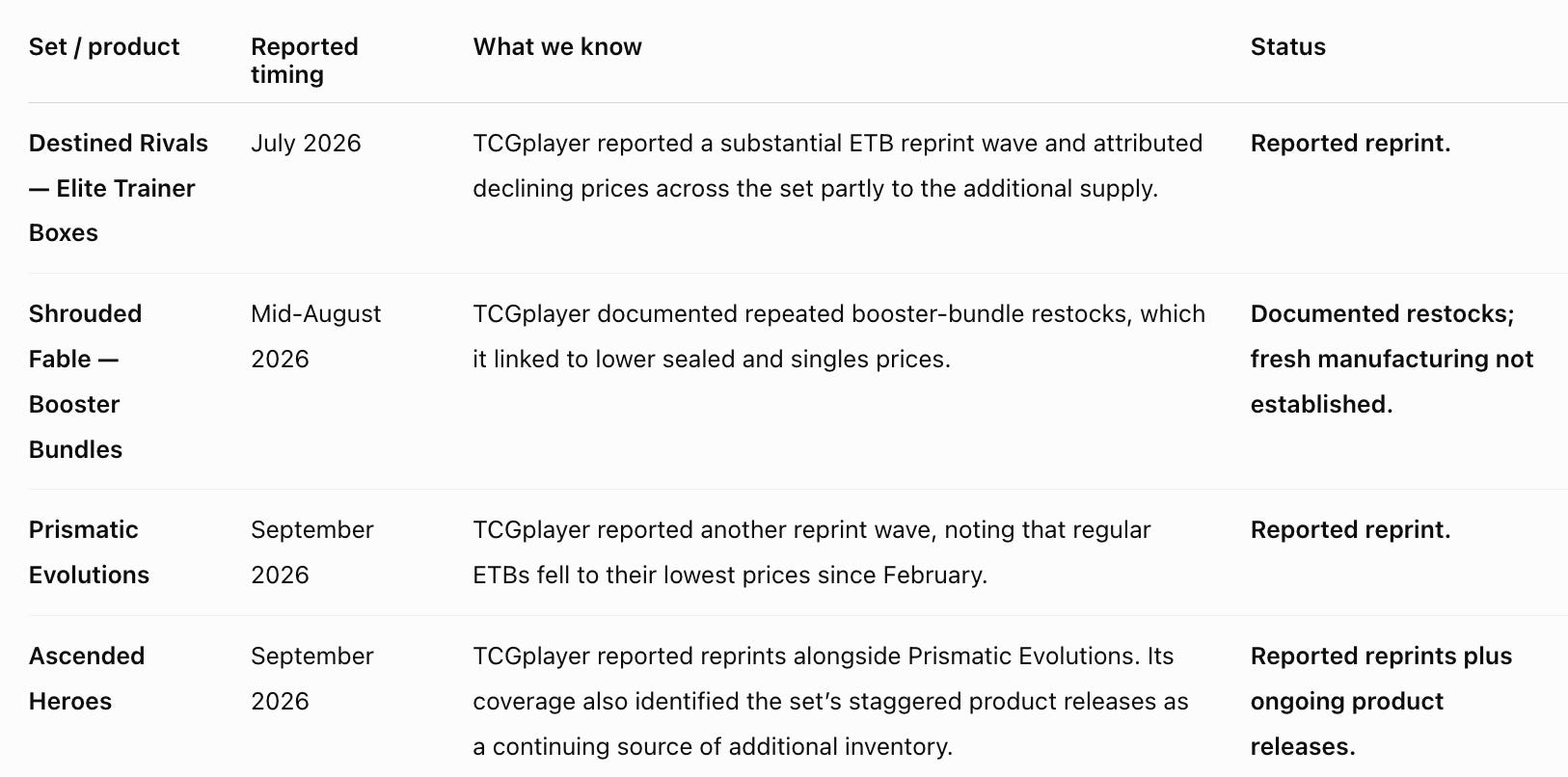
Prismatic Evolutions is a good example of how reprints can weigh on card prices. The September wave wasn’t the first time extra inventory entered the market in 2026. TCGplayer had already reported an apparent reprint of the set’s Super Premium Collection in May. Even rumors of future reprints can influence the market, as buyers hold off on purchases in anticipation of lower prices.

Prismatic Evolutions was released in January 2025, meaning Pokémon is still reprinting products from a set that debuted nearly two years ago. This is a good reminder that reprints and restocks can enter the market long after a set’s initial release. Large reprint runs can contribute significantly to PSA populations as more copies are graded and that ultimately puts downward pressure on prices.
Added Supply To Watch
Heading into the holiday season, rumors of additional reprints continue to circulate, although none listed in the table below have been confirmed by U.S. distributors. Given the extraordinary demand in this recent bull run, Pokémon has made it clear it intends to replenish retail inventory to improve availability and keep products on store shelves.
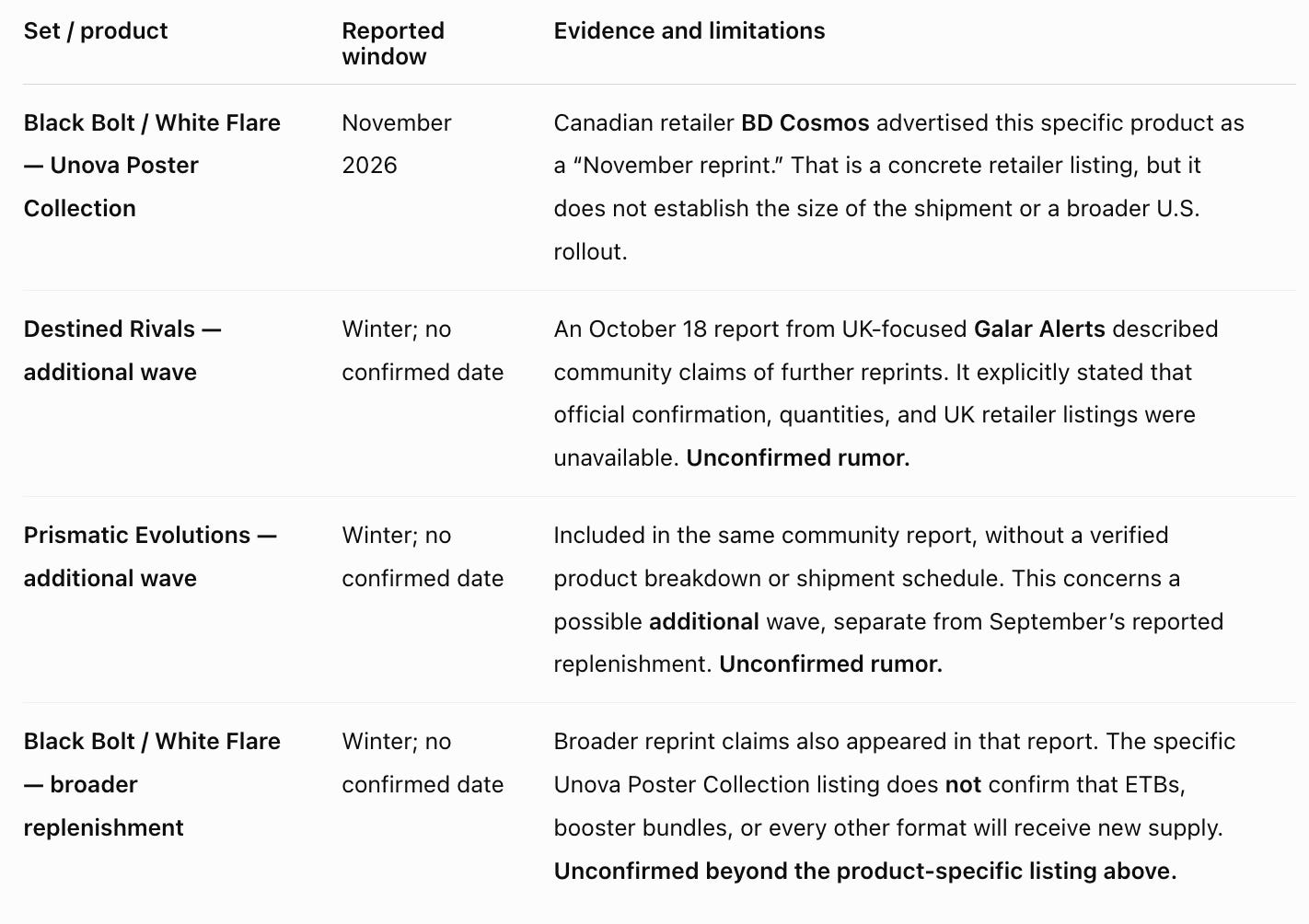
My Take: I suspect Pokémon might become increasingly aggressive with reprints and restocks. Not just to satisfy collector demand but to protect its retail partners. For most of the last couple of years, popular products sold out almost immediately. This has benefited resellers more than retailers and collectors. I suspect Pokémon wants to change the marketplace by making sure products are consistently available at retail prices. I can’t say for sure because Pokémon never publishes a reprint schedule. However, if this assumption is correct, we could be entering a period where reprints and restocks are more frequent than we’ve become accustomed to.
That’s it for the free section of the monthly update.
