

Disclaimer: This post is for entertainment only and is not financial advice. See full legal disclaimers here.
What happened
First, a housekeeping note: yes, this news is almost eight weeks old, and yes, I’m just now covering it. I didn’t have a PSA submission go out in June, so the pause never crossed my screen until I went to check current tier pricing when prepping the first partner promos for grading.
On May 28, PSA announced that it was pausing all four Value service tiers: Value Bulk, Value, Value Plus, and Value Max effective June 2 at 3:00 p.m. PT. PSA said the surge followed its May 14 announcement of a $200 million infrastructure investment and revised turnaround-time ranges. Submissions jumped approximately 20%, adding another 1.6 million cards and pushing its active backlog toward 10 million.
Then it got worse. The pause announcement sparked a last-minute rush to beat the deadline, pushing the active queue to nearly 14 million cards by June 9. PSA reported that the backlog had fallen to approximately 12 million by June 30 and 11 million as of its July 14 update.
PSA’s stated target is to reduce the backlog to roughly 5 million cards before responsibly reopening the paused tiers. Its original estimate was up to four months, but after the deadline rush, it revised that projection to five to six months. That currently points toward a late-2026 reopening, although slower-than-expected progress or another submission surge could push it into 2027.
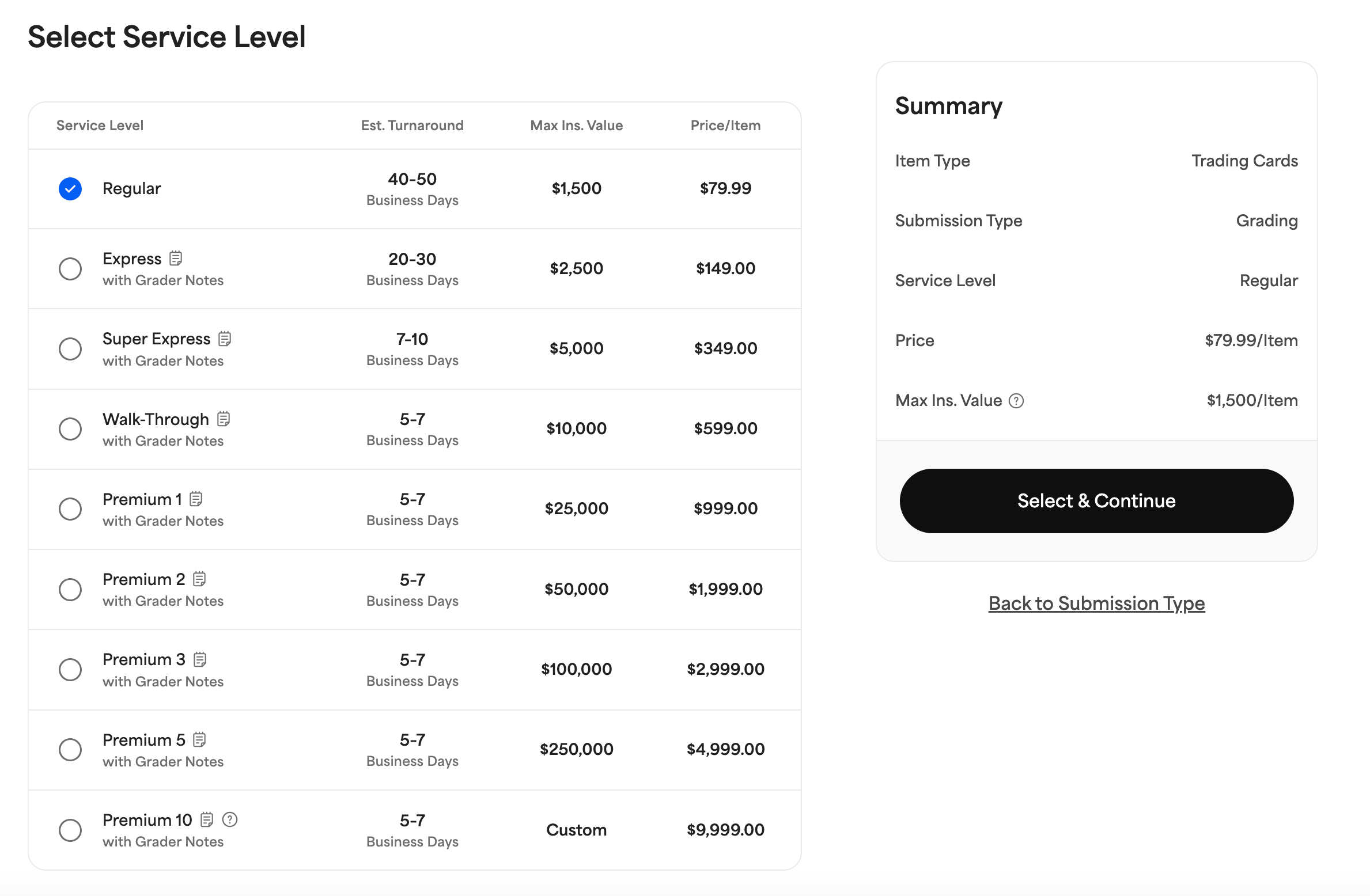
The practical effect is that the cheapest standard tier available directly through PSA right now is Regular at $79.99 per card. That is approximately more than three times the $24.99 Value Bulk price available immediately before the pause. Express, Super Express, Walk-Through, and the higher Premium tiers remain open above it.
The higher price is not the only problem. PSA also temporarily stretched Regular’s estimated turnaround time from 25 business days to 40–50 business days. And for collectors who made the Value cutoff, the wait may be considerably longer than the posted turnaround suggests. PSA warned that deadline-rush Value and Value Bulk packages could take six to eight weeks just to be opened and entered into the grading system, before the official turnaround clock even begins.
PSA did offer one concession. Collectors Club memberships that were active on May 14 and remain active will be extended at no charge for the duration of the Value Bulk pause.
Is this a repeat of 2021?
If your first thought was, “This is COVID all over again,” you’re not wrong to see the resemblance. On March 30, 2021, PSA suspended nearly all of its lower- and mid-priced card-grading services under record submission volume. The shutdown landed at or near the peak of the pandemic-era card boom, although the exact top varied by category. Many collectors who submitted through the cheapest tiers then waited well into late 2021 or 2022 to receive their cards, by which point much of the market was already in a serious drawdown.
That does not prove that every PSA backlog marks a market top. We only have one truly comparable modern episode, and PSA now has far more grading capacity than it did in 2021. But the relationship makes structural sense. Extreme submission volume can indicate maximum participation, maximum confidence, and maximum marginal grading: people paying to slab increasingly ordinary cards because the economics still appear to work at elevated prices. So take the signal seriously. A grading backlog is partly an operational problem, but it can also be evidence that speculative activity has moved unusually far down the quality curve.
This is one reason I am being cautious with the Zero to Hero portfolio. I do not want to chase expensive cards simply because they have already gone up or because the broader market feels strong. I would rather look for rare, genuinely desirable cards selling below their practical replacement cost, the amount it would reasonably take to pull, grade, or otherwise replace the same card in the same condition.
Replacement cost is not a guaranteed price floor. In a serious downturn, cards can trade below the cost of producing them, especially if sellers need liquidity or demand disappears. But buying below replacement cost gives us a meaningful margin of safety. It makes it harder for new supply to enter profitably, reduces how much speculative premium we are paying, and limits our dependence on the broader market continuing to rise.
If the Pokémon market keeps climbing, those cards can still participate. If the market rolls over, I would rather own scarce cards purchased below replacement cost than high-dollar cards whose prices depend on peak confidence and a steady stream of buyers willing to pay even more.
What is different this time?
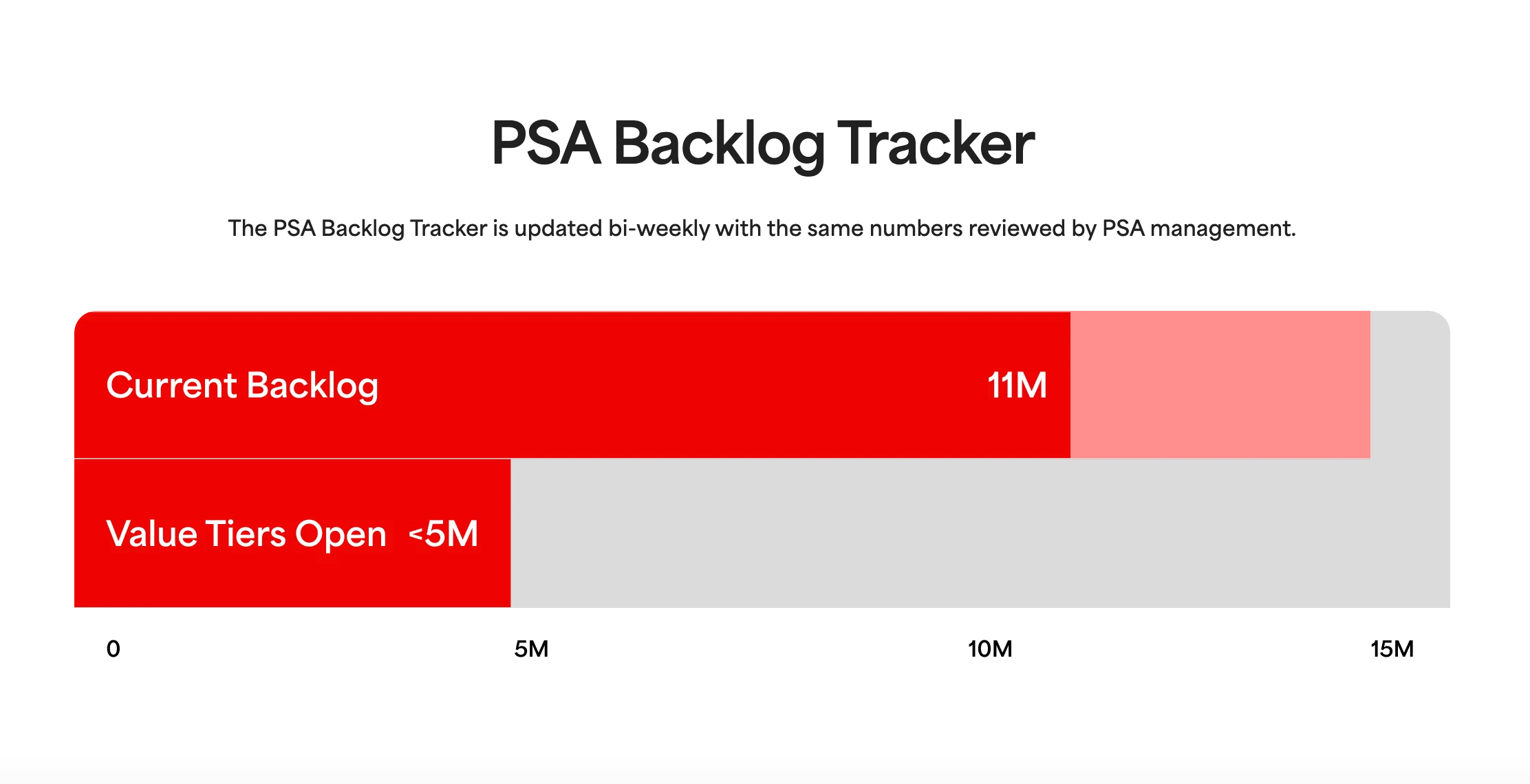
The main difference is operational severity. PSA says its grading capacity is now five times higher than in 2021, and this time it paused only the four Value tiers while leaving Regular and faster services open. Collectors can monitor the backlog through PSA’s public Backlog Tracker, which is updated every two weeks with the same figures reviewed by PSA management: https://www.psacard.com/info/backlog-tracker.
What I’m doing
I’m not submitting the First Partner promos I already own at $80 per card. Paying Regular-tier prices would destroy the investment economics. There is no attractive move here other than holding the cards and waiting for the Value tiers to reopen.
I’m not buying additional raw cards that need to be graded. With the Value tiers closed and no firm reopening date, buying raw cards would tie up capital for an unknown amount of time. In the last cycle, the backlog was not fully resolved until the market had already fallen sharply.
I’m focusing on already-graded cards selling below replacement cost. The best opportunities will likely be rare cards where the PSA 10 price is lower than the realistic cost of acquiring raw copies, absorbing the gem-rate risk, and paying for grading.
I may selectively use the $80 Regular tier for higher-end cards. If a card is valuable enough that an $80 grading fee still makes economic sense, I may do some “whale hunting” to keep things interesting. Those purchases will sit outside the formal investment recommendations and will be treated more as collector-driven or speculative buys.
I’m monitoring the backlog closely. I will track its decline month over month and reassess the strategy as PSA gets closer to reopening the Value tiers.
Bottom Line
The pause does not prove that the Pokémon market is about to crash, but it is a clear sign that grading demand and speculative activity are running hot. Until the backlog improves, I’m prioritizing liquidity and margin of safety: already-graded, genuinely scarce cards purchased below replacement cost, with only selective exceptions where the $80 grading fee still makes sense.