

Disclaimer: This post is for entertainment only and is not financial advice. See full legal disclaimers here.
Every Pokémon card shares a common blueprint. For new collectors and investors, mastering this layout is essential. This guide breaks down the key elements of a modern card, teaching you to identify rarity, set origin, and value indicators at a glance.
Front of the Card — Quick Reference Map
While the design of a standard Pokémon card has evolved, the core layout remains remarkably consistent across eras. Here is a quick-reference guide to a card's front:
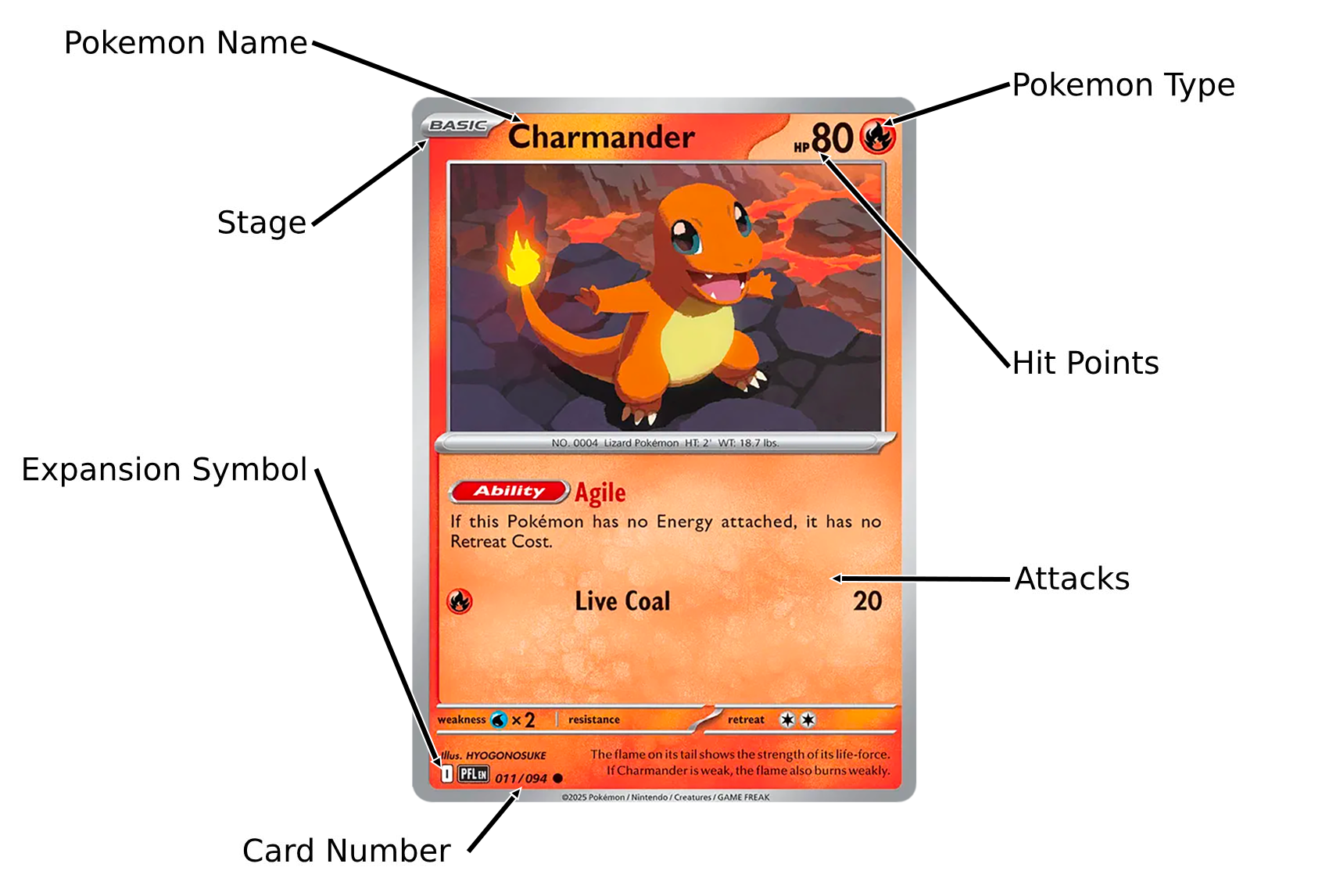
Name — The Pokemon’s Name.
Stage — Shows where the Pokémon is in its evolution line:
Basic
Stage 1
Stage 2
Modern sets also feature EX/GX/V/VMAX/VSTAR labels; think of these as era‑specific “power” versions.
HP (Hit Points) & Type — Hit points is the amount of damage a Pokémon can withstand before being knocked out, and its Energy type (Fire, Water, Grass, etc.).
Attacks & Abilities —Primary battle moves & special powers. Each attack shows the Energy cost and damage/effect.
Card Number —Printed at the bottom (e.g., 029/189). The first number is the card’s position in the set; the second is the total cards in the main set.
Expansion Symbol —The Expansion Symbol on a Pokémon card identifies the specific expansion set the card belongs to, often featuring a stylized icon or abbreviation with a holographic foil version on rarer cards. This card belongs to Darkness Ablaze.
Rarity Icon -
● common
◆ uncommon
★ rare
(Scarlet & Violet introduced new symbols—see the updated icons here.)
Holo Treatment — The Shiny Finish on Pokemon cards comes in a couple types
Non‑holo (no-shine)
Regular Holo (shiny art)
Reverse Holo (shiny background, normal art)
Full Art, Illustration Rare, Special Illustration Rare
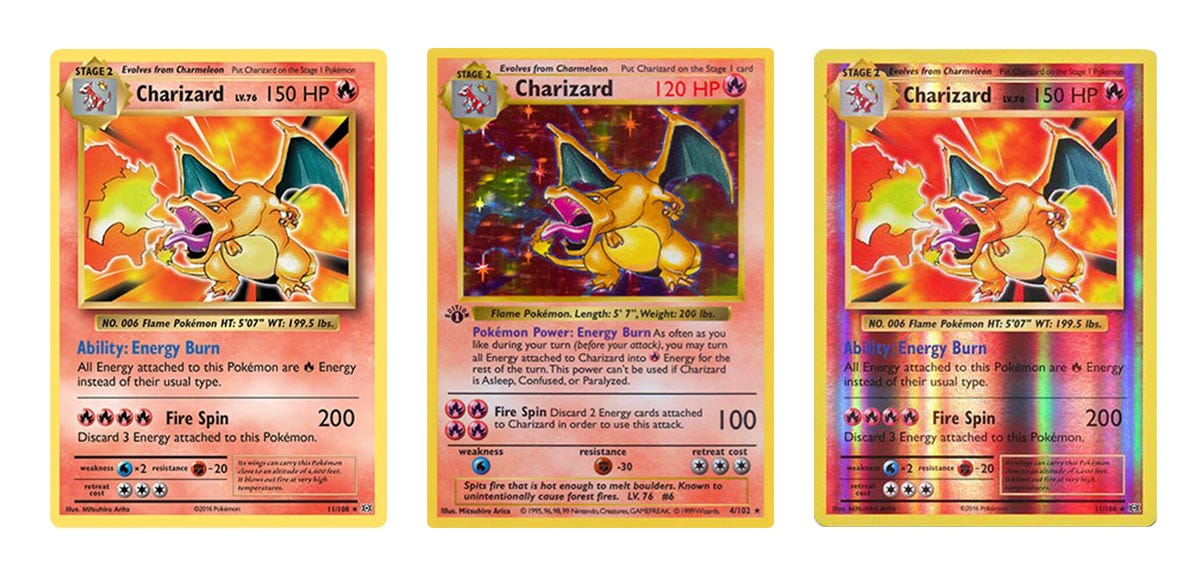
Pro Tip: Go to Pokecollector (or a similar site) and look through the different eras and sets to familiarize yourself more with the different types of English and Japanese cards. Focus should be on modern era ( Sword&Shield, Scarlet&Violet, Mega)
Back of the Card — English vs. Japanese
While the front of a Pokémon card carries almost all of the collectible and investment value, the back is mainly used for quick authenticity and language checks.
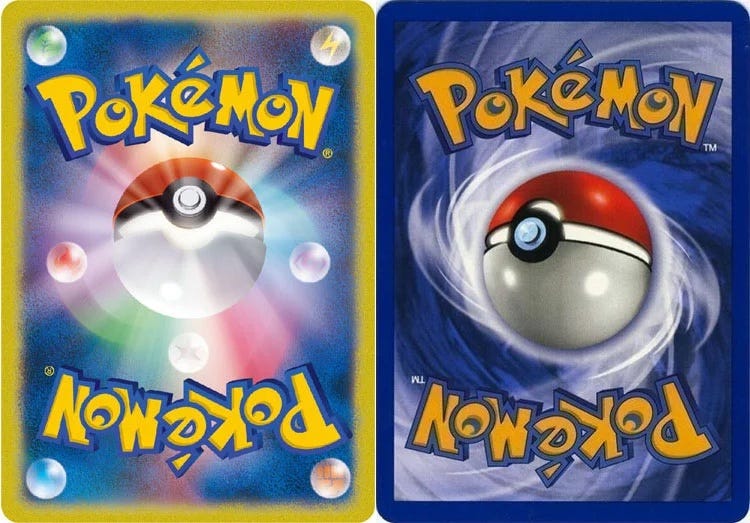
Modern Pokémon cards feature two distinct back designs depending on their region: the classic blue design found on International (English) cards, and the gold-bordered design exclusive to Japanese cards.
Japanese back (left): Distinct gold‑toned border/background with different typography and layout around the Poké Ball.
English (U.S./global) back (right): Blue border and blue swirl background with a central Poké Ball.
These backs are not interchangeable; An English front with a Japanese back (or vice versa) is an instant red flag for a counterfeit. Also watch for off‑color printing, fuzzy text, or incorrect gloss—these are common tells on counterfeits.
Variants & Special Categories (Front‑of‑Card Signals)
Modern sets are defined by a complex hierarchy of card types, featuring unique foiling, textures, and alternate art. Recognizing these distinctions is critical for navigating the market, whether you are assembling a master set or evaluating a card's long-term potential.—here’s your guide to the key ones:
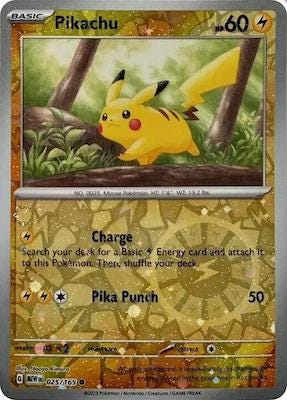
Reverse Holo: Foil background with non‑foil art window. Each holographic or reverse holographic card typically has a non-holo version which is more common. The holo versions are rare and more valuable.
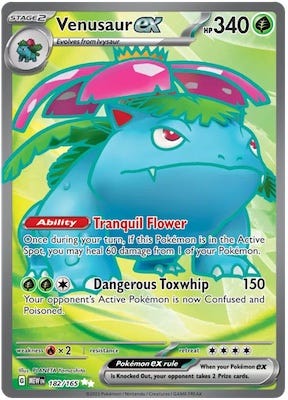
Full Art / Ultra Rare: Extended artwork that reaches the edges, often textured; stronger chase tier.
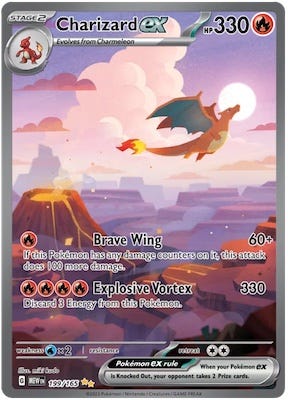
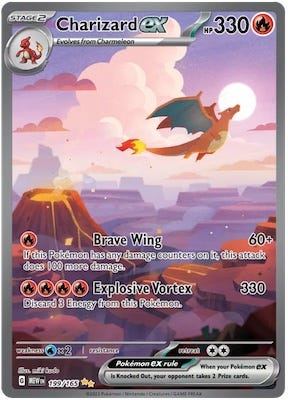
Special Illustration Rare Charizard From 151 Special / Illustration / Alternate Art: Scene‑style showcases with low pull rates—modern favorites. These are highly collectible.
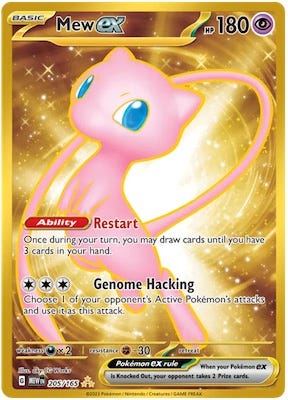
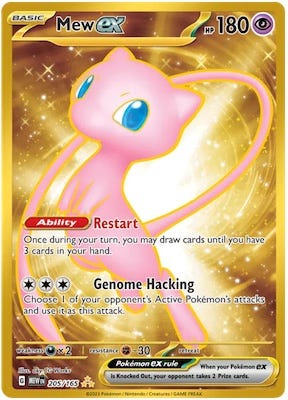
Secret Rare Mew Secret Rare: Card number higher than the set size (e.g., 205/198) and usually has gold or premium finishes.
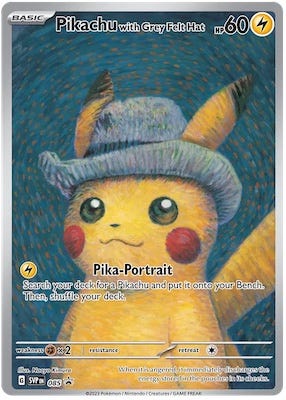
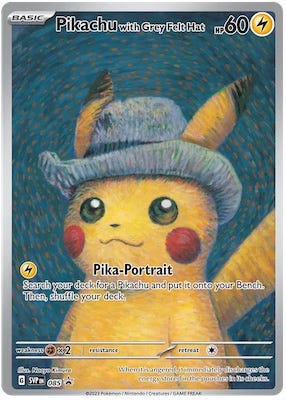
Grey Felt Hat Pikachu Promo Promos: Not found in booster packs. English promos use a black star symbol and “Promo” numbering. Japanese promos use codes like SV-P, S-P, etc.
Quick Condition Check (Pre‑Grade Mindset)
Before deploying capital into raw cards, you must learn to identify the microscopic flaws that can collapse a card's value from $5,000 to $500. Your inspection process should mirror the standards of major grading houses like PSA, CGC, and BGS, focusing strictly on the 'Big Four': Centering, Corners, Edges, and Surface.
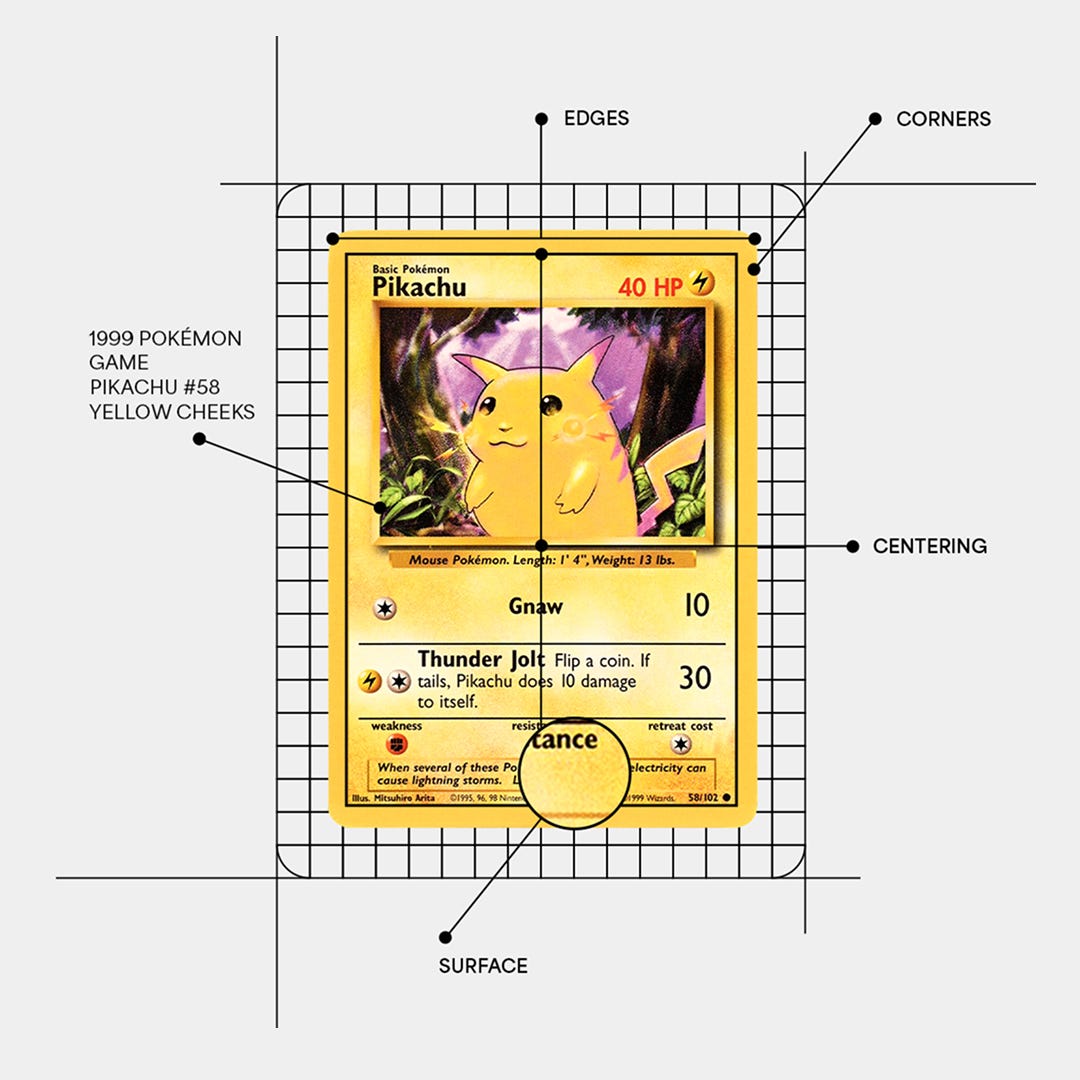
Centering: Even borders front/back; severely off‑center hurts value.
Corners: Look for whitening or dings—especially on dark borders.
Edges: Chipping/whitening along the edge is common and detracts from value.
Surface: Print lines, scratches, dents, holo foil defects; inspect under strong light.
Pro-Tip: Pack‑fresh ≠ perfect. Factory defects happen. Always inspect the front & back.
What Actually Drives Value (The Big Five)
Character Popularity – Tier-1 Pokémon (Charizard, Pikachu, Eevee) consistently outperform the market.
Scarcity - Defined by difficult pull rates, short print runs, and a low count of Gem Mint copies in existence.
Condition — Like in all collectibles, condition is everything. The price gap between a raw card and a PSA 10 can be massive.
Art & Story — Value attaches to stunning visuals, first appearances, and renowned illustrators.
Set/Era & Language — English and Japanese cards generally have the strongest demand and clearest pricing data.
X-Factors: Unpredictable events that ignite demand, such as tournament wins, new anime releases, or anniversary hype.
Fast Red Flags
Here are some of the biggest, easiest red flags that scream “fake” or “bad condition” the second you see them:
Front and back language/style don’t match (e.g., English front with Japanese back).
High-end modern cards (Full Arts/Alt Arts) should have etched texture. If it’s smooth and glossy, it’s likely fake.
Authentic holos usually have diagonal or complex patterns. Fakes often have a flat, vertical rainbow sheen that washes over the entire card.
Terrible centering, heavy corner/edge wear, or obvious creases.
Fakes often look blurry, light blue, or purplish instead of the crisp, dark blue design.
Price that seems too good to be true.
Your 10-Second Checklist
Whenever you pick up a card, run through this mental workflow:
Identify: Scan the Set Symbol and Rarity. Is it a standard card, or a “chase” variant (Full Art, Secret Rare, Illustration Rare)?
Authenticate: Check the Back (English vs. Japanese) and the Texture (if it’s a modern hit, does it have ridges?).
Inspect: Run the “Big 4” Condition Check—Centering, Corners, Edges, and Surface.
Evaluate: Apply the Value Drivers—Is the character popular? Is the population low? Is it a key set?
Safety Check: If you see a smooth surface on a textured card, a “washed out” back, or a suspiciously low price, put it back.
That’s it. You just moved from “guessing” to analyzing. Keep this recap handy, and every listing you browse will start to make sense.
Final Word: If you’re just starting out, forget vintage. Focus on rare modern cards in high grades. Stay sharp. Collect rare.