

July finished as another positive month for the Pokémon card market.
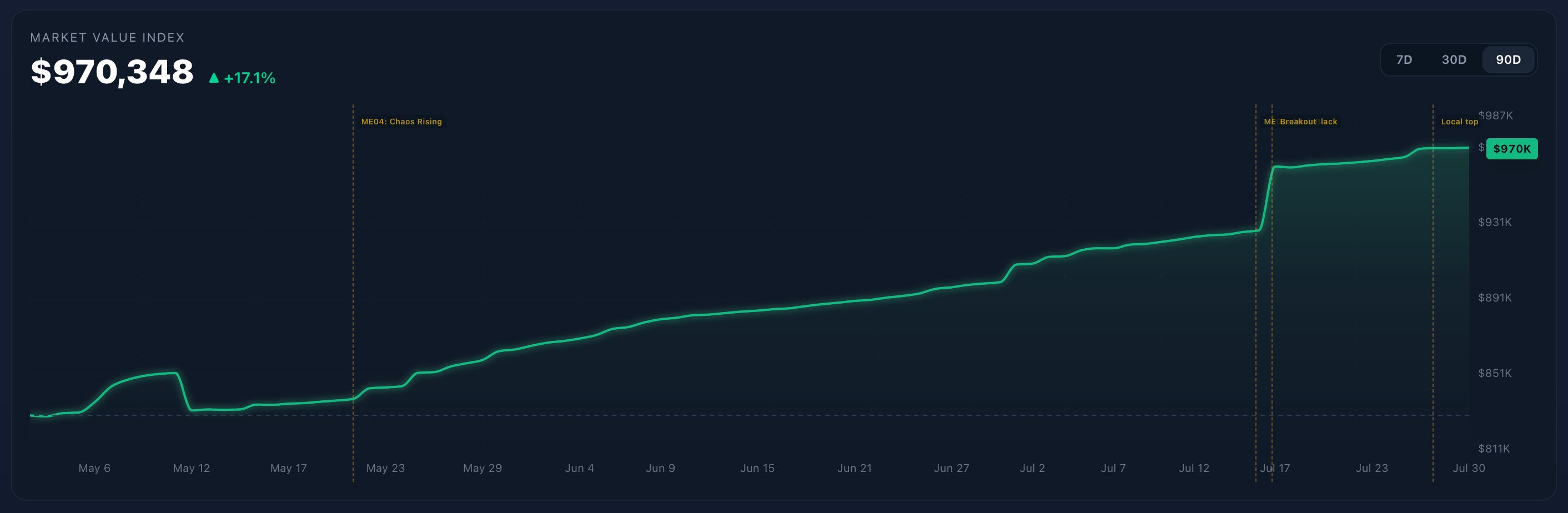
TCGIndex’s Pokémon Market Value Index currently stands at $970,348, with the cards it tracks gaining 2.46% over the past 30 days and 9.79% over the past 90 days. The index currently includes 32,146 cards.
For comparison, the S&P 500 was basically flat for the month (+0.09%), although it remains up 9.20% on a total-return basis for the year. Pokémon cards continued moving higher during a month when U.S. equities were essentially flat.
Key Highlights
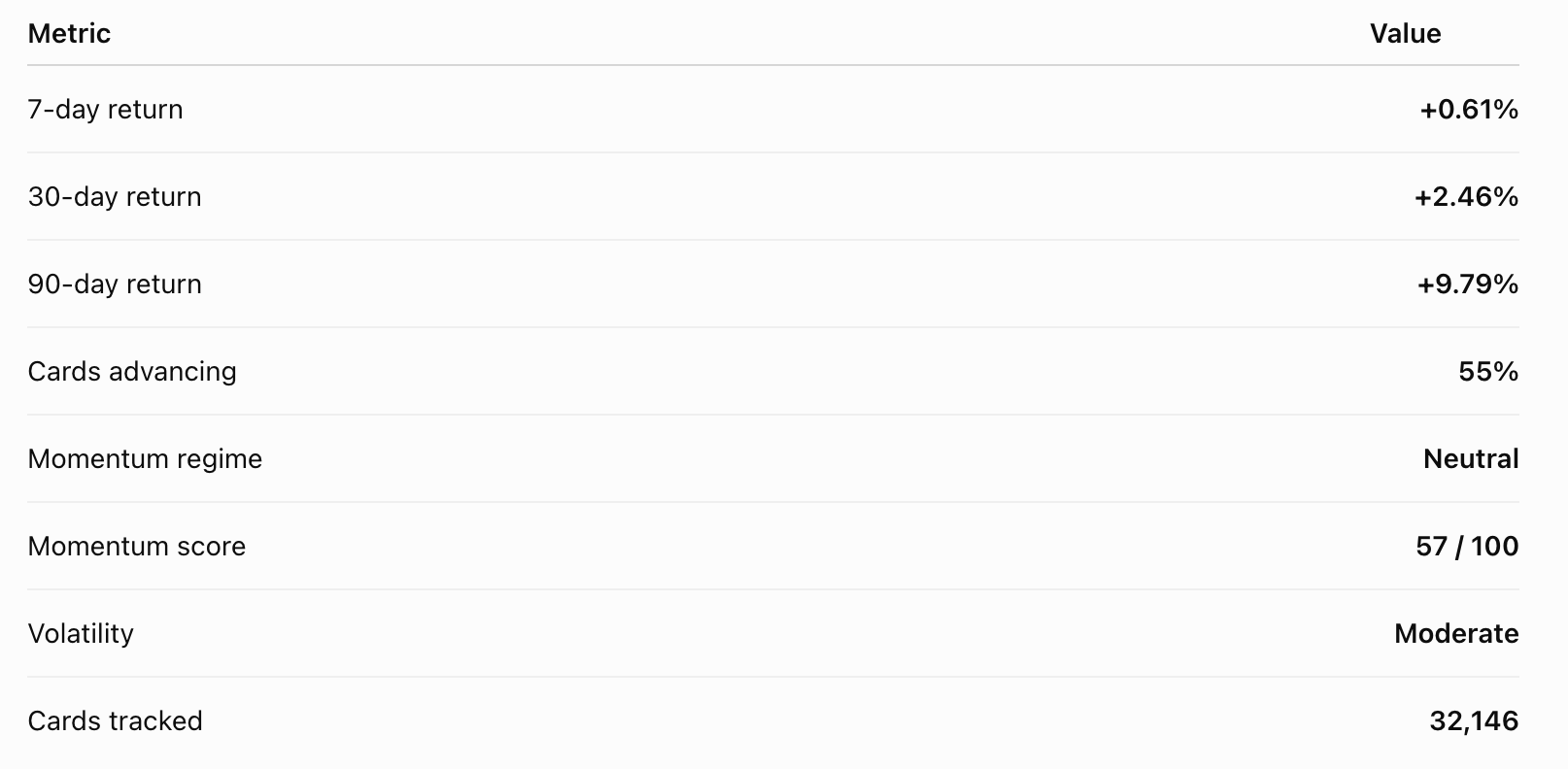
The market continues to move higher, but the pace has slowed from what we saw earlier in the year. That is not necessarily a bad thing.
A slower advance supported by more than half the cards in the index is healthier than a vertical move driven by a handful of speculative chase cards. The market is still constructive, but it is no longer a situation where you can buy almost anything and expect an immediate return. The easy money has largely been made. Card selection and entry price matter more now.
PSA Grading Pause
At the beginning of June PSA ceased accepting new submissions in all lower cost tiers: Bulk, Value, Value Plus and Value Max. They made this decision after a backlog that grew to 10 million cards. Existing orders are still being processed, but PSA has tied the return of “value” tiers to a meaningful reduction of the backlog rather than committing to a firm reopening date. PSA being forced to pause lower-cost submissions is one of the clearest signs that the Pokémon market may be getting overheated. While it doesn’t guarantee a market downturn, a similar backlog developed near the peak of the previous cycle. With that in mind, I want to revisit what happened then and what it could mean in 2026.
What happened during the previous pause
On March 30,2021, PSA suspended Value, Regular, and Express submissions after it had received more cards in three days than it had in the previous three months. They intended on restoring all service levels by the July of 2021, but that timeline proved far too optimistic. Value submissions did not return until June 2022, 14 months after they were paused. The shutdown arrived near the peak of the pandemic-era card boom. That doesn’t mean the PSA decision caused the crash, but it was evidence how speculative the TCG market had become.
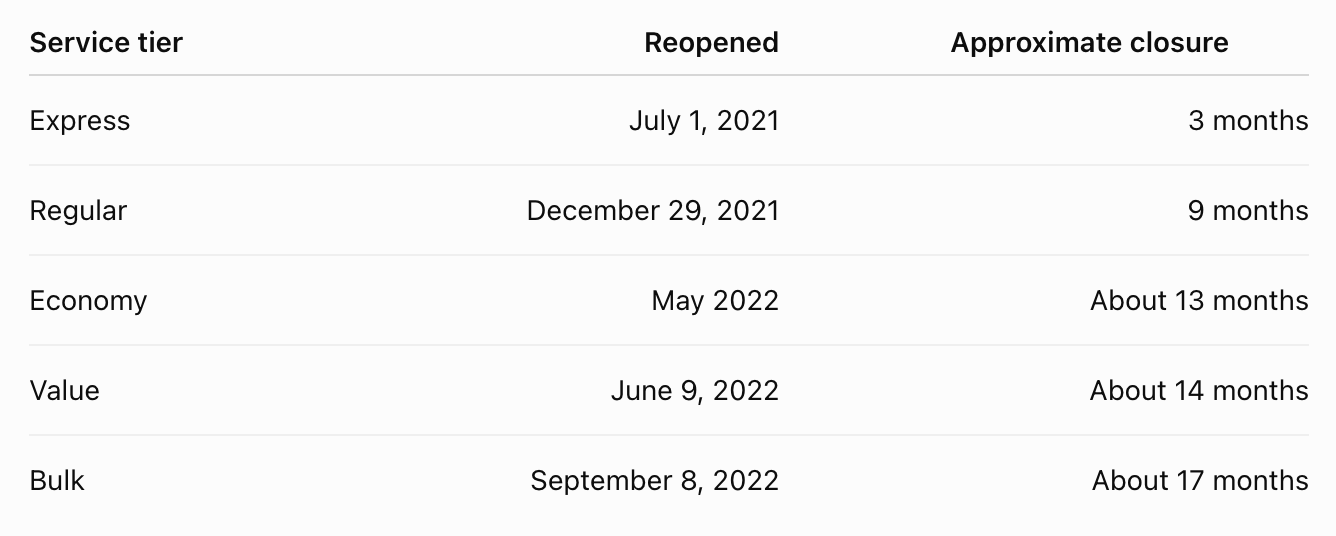
Prices weakened over the following months. Without the ability to quickly grade and flip, many speculators lost interest and moved elsewhere. It also created a delayed supply problem. As turnaround times stretched, fewer graded cards were reaching the market. This created the impression some cards were scarcer than they actually were temporarily pushing prices higher. Once the backlog began to clear, millions of delayed submissions returned to sellers and added significant supply to an already cooling market. This put downward pressure on prices, especially modern cards. The market eventually recovered, but anyone who bought expensive cards near the peak had to hold them for years or sell at a loss.
Could the Market Correct Again?
The same thing could happen again, yes. PSA initially estimated that it could reduce the backlog to its reopening target within four months, but that timeline has already been extended and the backlog is moving in the wrong direction. PSA has significantly more grading capacity than it did in 2021, so another 14 month closure isn’t inevitable. Still, investors should not assume “temporary” means brief.
In the short term, the pause may cause a temporary increase in PSA 10 prices by restricting the flow of newly graded cards. The longer term risk is that the backlog eventually returns to the market as a large wave of pent-up supply. I am not predicting another crash, but I am becoming much more selective about what I buy and I am avoiding modern cards whose prices depend on a temporary shortage today lasting indefinitely.
What I’m Seeing
1. Japanese Promos
Several of the strongest Japanese Promos appear to be plateauing after an enormous run-up.
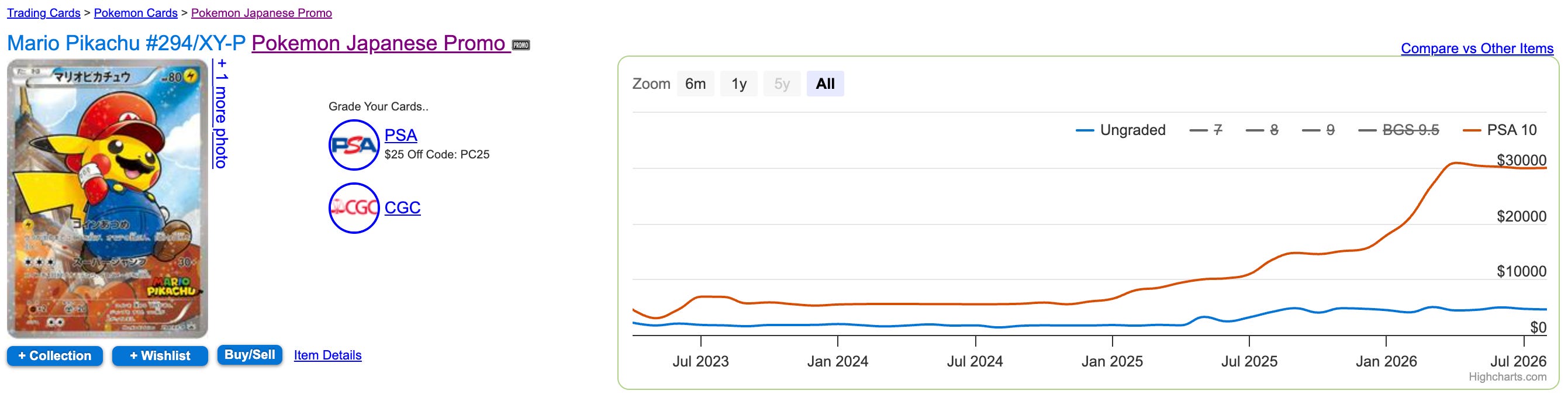
Mario Pikachu and Scream Pikachu have both flattened near recent highs, while Detective Pikachu pulled back a slightly from it’s peak and has stabilized. It doesn’t necessarily mean the category is entering a decline, but it does suggest the easy upside may already be behind many of these cards for now.
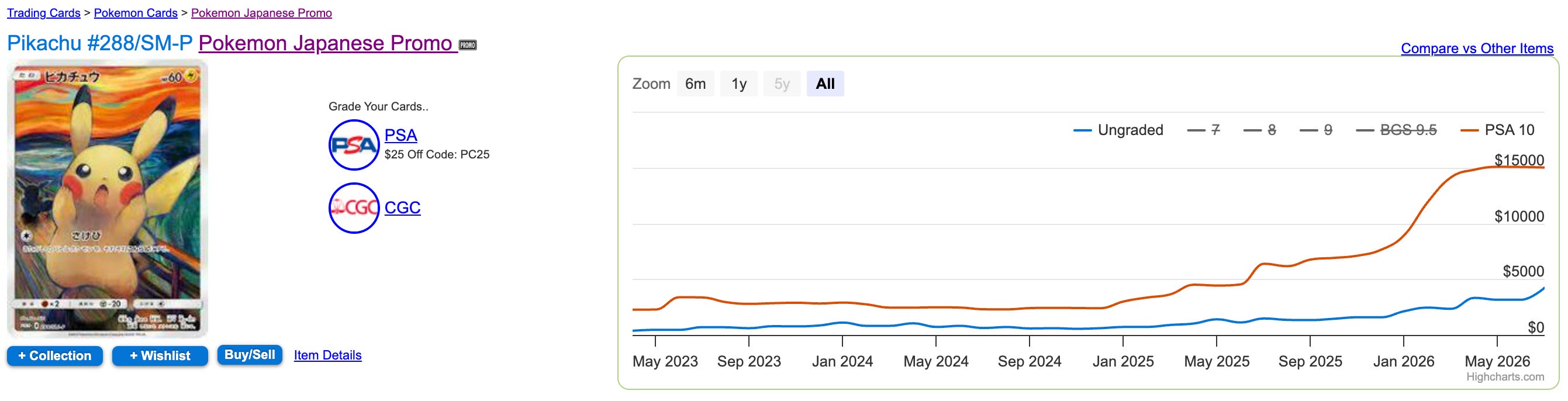
I still love Japanese promo cards, especially ones that contain Pikachu, but many high-end promos have had a 10x type move. I would be cautious about chasing high dollar cards in this category from here and would wait for a meaningful pullback or look for promos that have not repriced like this. However, it is a good illustration of the type of returns possible by owning the right cards.
2. Demand for New Products Remains Strong
Demand for new sealed product is still running hot. The First Partner Promo releases sold out quickly, with lines out the door at Target. And I was twice unable to buy 30th Celebration products from Pokémon Center after waiting in the queue for hours. That level of demand is clearly still bullish. Although it increases the risk of overpaying once they reach the secondary market.
3. PSA 10 Supply will Start to Look Tighter than it Really is
The Value-tier pause will assuredly support current prices for some time. But much of the missing supply is delayed ( rather than eliminated ) and will hit the market at some point in the future.
My Read on the Market
My view has not changed substantially. The market remains healthy, but it is no longer cheap enough to justify buying indiscriminately. I’m still comfortable buying cards with strong collector demand and limited replacement supply, especially where I can acquire them below the combined cost of pulling and grading them. I’m seeing Special Illustration Rares trade below the current cost to grade ($80) across the market, and I plan to take advantage of those opportunities. At the same time, I’m avoiding popular cards that have had massive run-ups. Buyers are increasingly chasing performance, and I have no interest being the last one left holding the bag on a $10,000-$30,000 card.
